.avif)
Audiovisual agency in Toulouse: how to choose the right one (2026)
Choosing an audiovisual production agency in Toulouse
Introduction
Choose one audiovisual production agency in Toulouse, it's not just comparing quotes and showreels. The real subject is: will this agency understand your context, your constraints, and what the video should produce behind (reputation, trust, leads, sales)?
Here, we are going to lay the foundations simply. How to read a portfolio without being fooled What criteria to check before signing. What questions to ask on the process, filming, post-production, rights, and distribution strategy. The objective: that you choose an agency for good reasons, and that your video really serves your business.
Start by framing what the video should produce (not what it should “show”)
When you are looking for an audiovisual production agency in Toulouse, you can very quickly find yourself talking about images, plans, rhythm, music except that you should avoid that, especially during the first call.
The problem is that if you start there, you may end up making a “beautiful” video. A marketing video is a tool. And like any tool, you first need to know what it's used for.
Before you even compare agencies, take ten minutes to get one thing straight: What result do you really expect at the end of this institutional advertising or video campaign.
The 4 goals that come back (and how they change the production) : reputation, trust, recruitment, acquisition.
- Notoriety: You want to be identified more quickly and clearly. Here, the priority is readability: a simple message, an artistic direction consistent with your brand.
- Trust: You want to reassure. The cast, the tone, the evidence. We try to highlight concrete elements (process, figures, feedback, behind the scenes). A video can be sober/minimalist and very effective if it advocates the truth and we really find what you are saying once we use your services/products.
- Recruiting: You want to attract profiles. We do not sell “values”, we show a daily life: the team, the way of working, your requirements, the global atmosphere. There, writing and editing will make the difference depending on the intention sought.
- Acquisition (leads, sales): The priority is to transcribe the customer journey, you must contact him and for that nothing beats a great story (storytelling) and emotions, it is thanks to this that we get a message across and that we leave a mark on the minds of your future consumers.
If your lens is out of focus, the quote will be vague and your comparison of video providers will be biased.
The simple test before briefing an agency : audience, message, expected action, broadcast channel.
If you don't have a clear answer to these 4 points, that's where you have to work.
- Audience : who exactly needs to be convinced? (end customer, management, HR, investors...)
- Message : what does this person need to understand in one sentence?
- Expected action : what do you want her to do after the video? (make an appointment, ask for a quote, apply, subscribe)
- Broadcast channel : where will the consumers who come across your advertising campaigns be? (website, landing page, LinkedIn, YouTube, meta ads, lounge)
From there, you can brief a creative agency properly, and judge their response in order to avoid mistakes : Does she help you frame the project, or does she jump directly into the technical/creative part.
What really differentiates an audiovisual agency in Toulouse (beyond the showreel)
In Toulouse, you will find very good technicians, very good cameramen, very good editors. Well, that's what you think (everyone has their own job) and sometimes a video may seem well made to you but unfortunately you don't have the knowledge, the experience and the perspective to know if this production really has a “great production”.
Portfolio: What to look at, and what to ignore : coherence, intentions, comparable cases, results.
What I recommend: Look at a portfolio like a decision-maker, not like a director.
What to watch
- Comparable cases : same sector, same target, same level of requirement (or more).
- Brand consistency : does each movie resemble the client's brand, or does everything resemble the agency's style?
- The clarity of the message : even without the sound, do you understand what is being sold, to whom, and why?
- The outfit over time : a good plan, anyone can make one. A good movie is a series of meticulously chosen decisions.
What to ignore (or put a lot of perspective)
- The “beautiful images” without context.
- The material shown as the main argument.
Method and support: the invisible part that makes quality : workshops, script, storyboard, validations, follow-up.
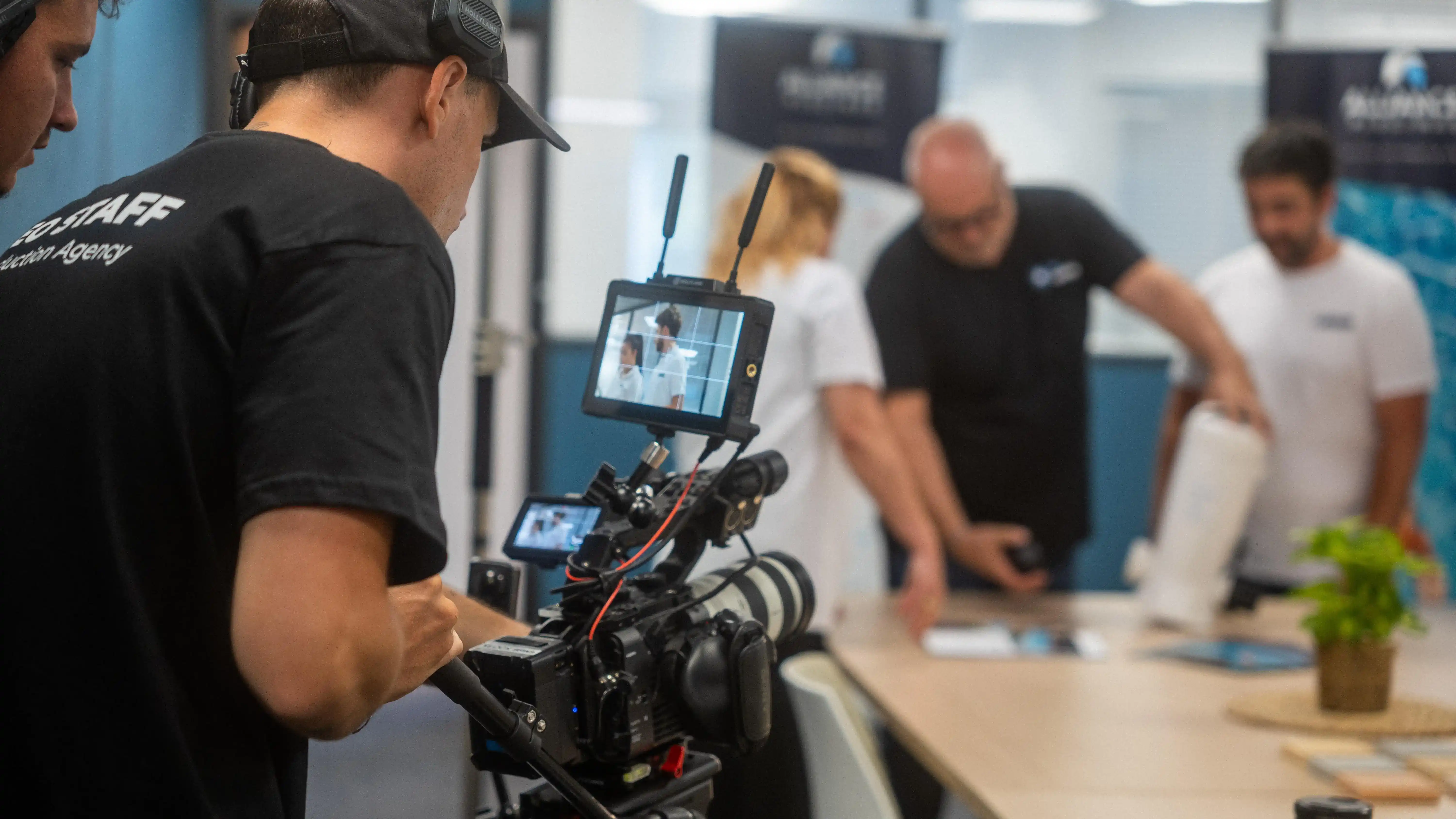
A serious agency does not “make a video.” Elle Pilot a production.
And this management is where the difference is made. Not just about the shooting day, but about everything that happens before and after.
Here is what you have the right to expect, very concretely:
- Upstream framing : objectives, target, message, formats, distribution.
- A handwriting : even for a corporate movie, you need a wire. A script, a workflow, a logical sequence.
- A storyboard or sequence plan : not necessarily a graphic novel, but a clear vision of what you are going to shoot.
- A validation system : who validates what, when, and on what criteria.
- Post-production follow-up : editing, sound, calibration, packaging, combinations
The key point: a good agency makes your life easier. She is anticipating. It tells you what is missing. It protects you from oversights (rights, formats, planning, distribution).
If you feel the opposite, a lot of “we'll see”, few questions on their part, it's often the start of unpleasant surprises.
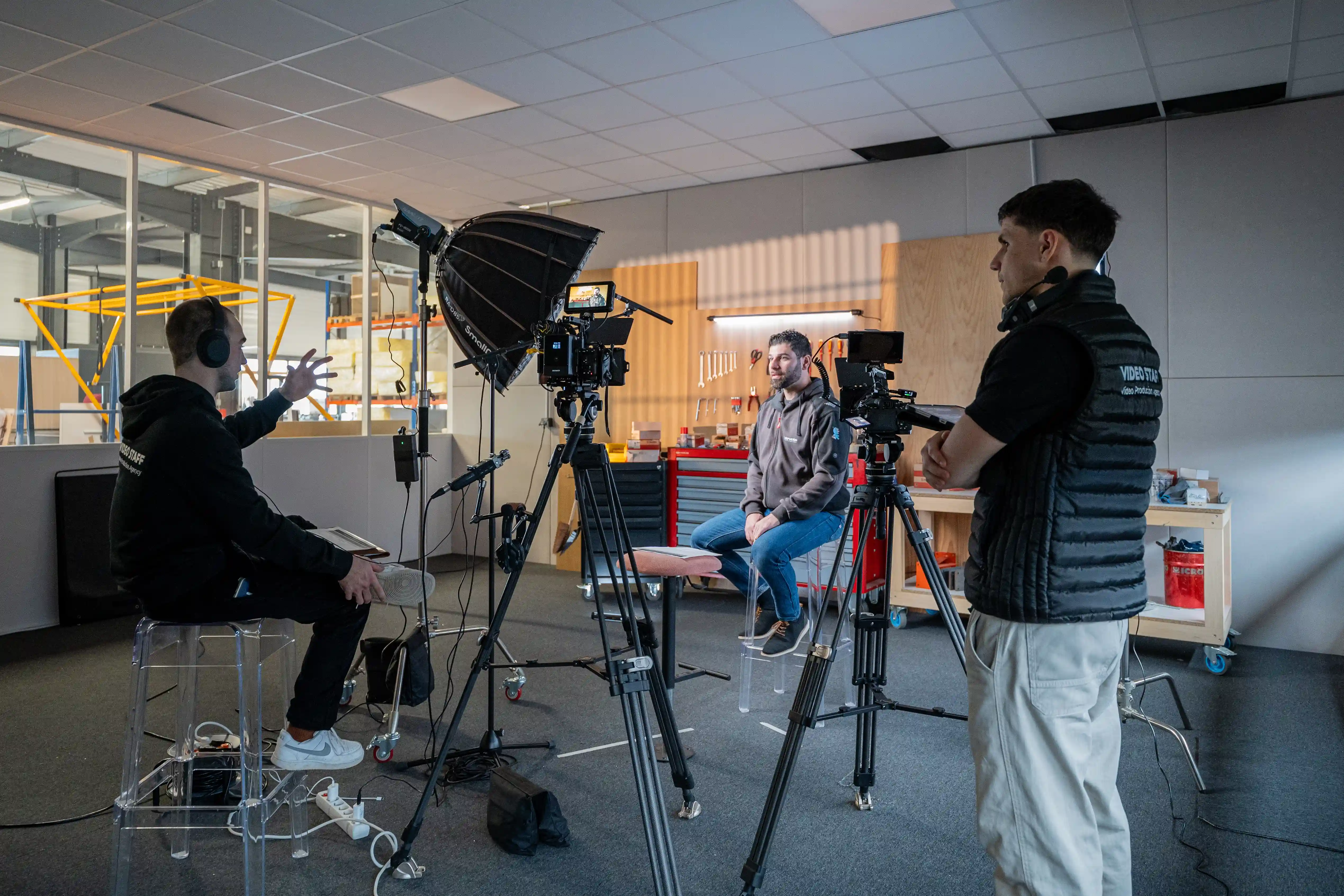
That's also why we decided to call each other “First Class” we want our customers to have a real experience that will not be found anywhere else, We value quality over quantity
Questions to ask before signing (and answers that should alert you)
At this point, you've framed the objective and you've seen portfolios. Alright.
Now, the real sorting is done on one point: the agency's ability to give you a clear framework. Because production, even in Toulouse with simple logistics, can be a sport if no one really drives. This is why we recommend that our clients within the agency be strongly involved in the realization of the project.
Your aim is not to ask “technical questions.” Your aim is to check three things:
- Does the agency have a repeatable method?
- Does it protect you from “blind spots” (rights, distribution, deliverables)?
- Does she know how to say no when she has to?
Process: who does what, when, and how you validate : preprod, shooting, post-prod, returns.
Ask the agency to explain the project to you Like a schedule.
Here are the simple questions that avoid 80% of unpleasant surprises:
- Who is your single point of contact on a daily basis? And who makes the decisions on the agency side?
- What's included in pre-production ? (workshop, script, roll out, location, location, casting, storyboarding, planning)
- How is the shooting day going ? (team present, everyone's role, time management, plan B in case of the unexpected)
- How is post-production set up ? (editing, sound design, calibration, packaging)
- How many round trips are planned, and above all: How returns are structured ? (a person who centralizes, group feedback, priorities)
- What deliverables are included ? (vertical/horizontal formats, combinations, subtitles, ad versions, billboards)
On the other hand, an agency with experience also asks you questions. A lot. Because if you don't clarify together, you're going to pay for adjustments later.
If you already have a brief or a quote on the table, we can quickly review it and tell you what's missing before you commit.
Rights, music, images, distribution: the details that cost a lot after the fact : transfer, duration, territories, formats.
It's the least “sexy” part, and it's often the one that hurts the most when it's forgotten.
Three topics to lock in:
Transfer of rights (your images, your film)
- Duration (12 months, 24 months, unlimited?)
- Territories (France, Europe, world)
- Supports (web only, TV, cinema, DOOH, networks)
Music, images, voiceovers, actors
- Is the music royalty-free, or restricted to certain uses?
- Is voiceover included? With what operating perimeter?
- If you are filming people: what contracts are planned (image rights, actors, extras)?
Distribution and formats
- Is your video designed for its channel (LinkedIn, YouTube, YouTube, site, ads) or simply exported “in several formats”?
- Are subtitles included? (often essential in B2B or for snack content)
If you are unsure, start from the following principle: If it is not written, it is not included. (we sound like that)
Budget: how to compare two quotes without comparing apples and drones
The budget is often the place where everything gets mixed up: and when you have two very different quotes in Toulouse, you no longer know what to compare.
The point to keep in mind is simple: You're not paying for cameras, you're paying for choices. A lighter team, shorter pre-production, tighter post-production, more limited rights... all this varies the amount. And that's not necessarily a problem. As long as it is assumed and respects your budgetary constraints.
The positions that vary a budget in Toulouse (and why it's normal) : crew, cast, locations, VFX, calibration, sound design.
Here are the lines that really explain the differences. No need to be an expert:
- Pre-production : workshop, script, tracking, storyboarding, planning. The more work is done, the more efficient the shooting is, and the more “premium” the result will be
- Team : Real/DP, camera assistant, electrical manager, engineer, machine, sound engineer, styling, makeup... A “compact” team may be enough, but it has limits. A “complete” team is more expensive, but on the set, each expert has his own mission and responsibilities, so fewer “versatile” profiles.
- Cast and extras : pro or internal, contracts, image rights. It's often underestimated.
- Locations/logistics : authorizations, management, travel, parking, security. In Toulouse, some places require more planning than expected. (for example for a drone)
- Hardware : let's take the example of an interview if it is done with 1/2/3 cameras, but overall the equipment does not have that much influence except for certain types of productions
- Post-production : editing, calibration, sound design, mixing, mixing, subtitles, graphic design, combinations. Does a single editor take care of everything or is each of these parts handled asynchronously by experts in their fields?
- VFX/compositing/Motion design : as soon as there is tracking, overlay, the budget can rise very quickly.
- Deliverables : a master version + X combinations (formats, durations, subtitles, ads versions)
The 3 signs of a “cheap” quote that will be expensive : flawed process, lack of structure
There are aggressive quotes that are honest. And there are others that are just incomplete.
The good reflex: ask the agency to explain the quote to you in two minutes, as if they were defending it in front of your management.
After if you want to know How much does a video cost in 2026
Choosing local in Toulouse or working remotely: the real good question
It's a question we hear often, and it's legitimate: “Is it absolutely necessary to An agency in Toulouse, or can we work with someone else?”
The simple answer: Both work. The real question is not geographic. It is operational: What will secure your project and reduce friction while guaranteeing optimal results
When proximity changes everything : locations, reactivity, access to places, logistics, relationships.
Proximity is an advantage when your project requires land and responsiveness.
- Quick findings and decisions : if you hesitate between two places, if the light changes, if you need to adjust a plan, a local agency can intervene quickly.
- Access to sites and to the network : some permissions, some contacts, some “small details” are better managed on site.
- Logistics and contingencies : parking, access, timing, weather, delay by a speaker when it happens, being close simplifies a lot.
- Relationship and alignment : for some customers, a face-to-face workshop (brief, script, validation) saves a lot of time. You can quickly see if you are on the same page.
In other words: if your project has a lot of unknowns, a lot of partners, or a tight schedule constraint, The local can save you more than it costs.
When “remote” works very well : multi-site projects, organization, single interlocutor, method.
Conversely, working remotely can be very fluid if the method is solid (agency side haha)
- Multi-site projects : when you have several locations, several teams, or an organization that is already structured, the “local” is less decisive.
- Square preproduction : clear brief, validated script, clean shooting plan, validation milestones... if everything is in place, distance is no longer an issue.
- Single point of contact and follow-up tools : good management (planning, validations, centralized returns, structured deliverables)
- Occasional shootings : if the agency knows how to build a local team (or travel effectively) while maintaining the same requirements, you lose nothing, that's what we do in 90% of our productions with our customers and that has no negative consequences for the smooth running of the project/filming.
The test to do is simple: ask the agency How does she manage a project when you are not in the same city. If the answer is structured you are calm for the future.
Conclusion
If you have to remember one thing, it's this: a good agency isn't just about creativity, it's also about the method.
If you are looking for an audiovisual production agency in Toulouse with a marketing approach, you can make an appointment with First Class
Written by Maxime From the Première Classe agency
High-Standing Video Agency
enter the era of unforgettable videos.
Toulouse, France
14:52
GMT+12
Toulouse, Francia
14:52
GMT+12
Los Angeles, US
14:52
GMT+12
Lisbon, Port
14:52
GMT+12
Moscow, Rus
14:52
GMT+12
.avif)
.webp)